
A heavy police presence deterred marches
Nairobi (AFP) - Kenyan police shut down much of the capital with a massive security operation on Thursday to prevent protests marking two years since a landmark “Gen Z” uprising.
Activists had hoped to hold a memorial march through Nairobi for the dozens killed by security forces in June 2024 during protests against economic hardship and corruption that led to parliament being stormed.
That was a watershed moment in which young Kenyans rallied together, ignoring traditional ethnic divisions – and it turned June 25 into an annual day of protest due to ongoing frustration with the government of President William Ruto.
But they have paid a heavy price.
At least 127 people were killed during protests in June-July 2024 and a similar period in 2025, according to a police watchdog, as security forces shot people with near-total impunity.
The authorities took no chances on Thursday, closing off traffic on major roads into central Nairobi and flooding key areas with officers who fired teargas at the first sign of groups gathering.
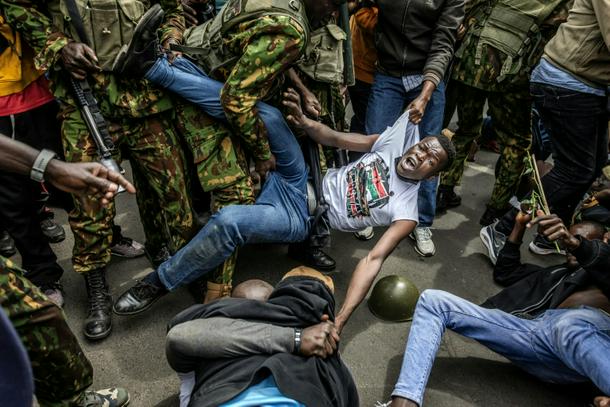
Protesters in the Kenyan capital were arrested outside the parliament building
AFP journalists saw long lines of police wagons, horse patrols and large numbers of plainclothes officers.
“They know people are not afraid of police in uniform. But they are scared of these plainclothes cops because they can just kill you and go,” said Moses, 31, a motorbike-taxi driver.
Many were too afraid to march.
One young woman in the business district told AFP: “I don’t want to die. I’m the oldest (in my family). I just want to work.”
- ‘Organised terror’ -
A small group of activists, victims and politicians managed to reach parliament to lay flowers for those killed two years ago, chanting: “This is not a police state.”
“Life is so hard,” said Jacinta Anyango, whose 12-year-old son Kennedy was killed that day, as she laid a white rose on the barbed wire around parliament.
At least three were arrested when mounted police dispersed the group and by late afternoon, the normally hectic business district was completely deserted.
Amnesty International denounced the shutdown, saying: “A nation that honours its fallen does not lock its people out of their own city.”
Interior minister Kipchumba Murkomen praised the police operation. He said 355 people had been arrested across Kenya but there had not been widespread unrest.
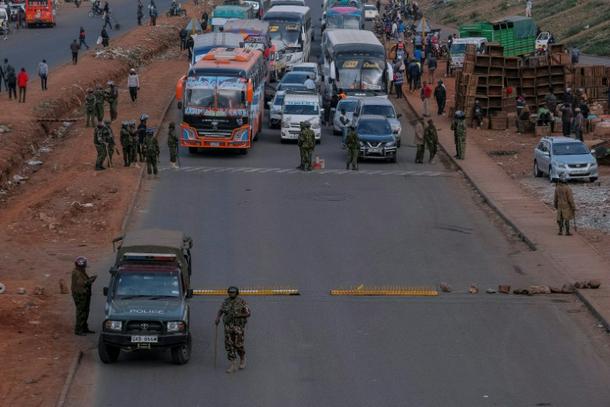
Police shut down key roads into the central business district
The Nairobi shutdown was in response to “an intelligence report that some people wanted to bring in goons and criminals to do looting and to attack innocent civilians”, he told reporters.
Hired “goons” have been increasingly employed by Kenyan politicians from across the political spectrum to assault opponents and civil rights groups but many appear to be working with the authorities.
AFP saw scores of them operating alongside police during last year’s protests, and they were blamed for the massive looting and vandalism that followed.
This year, police appeared to rely entirely on their own forces, assisted by the fact that many Kenyans have been terrified away from even peaceful marches.
- ‘Clearly unpopular’ -
Many prefer to wait for the general election in August 2027 to show their anger at Ruto, although it remains unclear if a strong challenger will emerge.
Ruto has long been associated with violence.
He was charged with crimes against humanity by the International Criminal Court for inciting attacks during mass election unrest in 2007-2008, a case that was dropped after alleged witness intimidation.
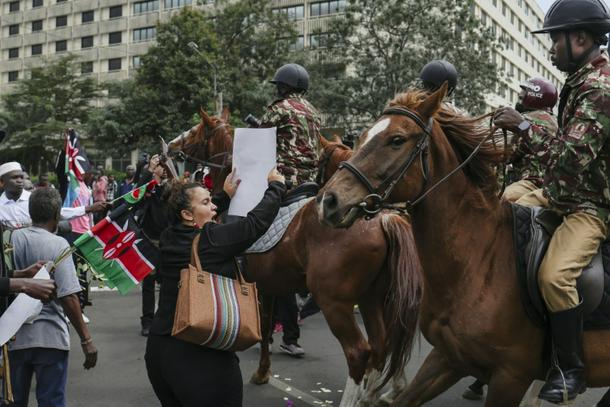
Mounted police were part of the heavy deployment in Nairobi
He has since reinvented himself as a business-oriented leader and a favourite on the international scene, recently hosting French President Emmanuel Macron for a major African summit.
Ruto offered an olive branch to protesters last week, announcing that more than 1,100 victims of violence would receive compensation.
“No other administration… has made payouts to victims of protests,” said political analyst Javas Bigambo, who also praised the president’s ambitious plans to revamp social housing, health insurance and infrastructure.
But the promises of economic transformation ring hollow with many Kenyans, who accuse Ruto of a string of broken pledges, corruption scandals and abductions targeting critics.
Ruto is “clearly very unpopular with many Kenyans, especially the Gen Z” youngsters, said political analyst Gabrielle Lynch.
”(He is) using security and intelligence services to make Kenyans worried about speaking out against the state,” she said.